

Back to All News
 Back to All News
Building South Carolina’s Workforce Means Building Pathways to Opportunity
Tuesday, Sep 15, 2026
Building South Carolina’s Workforce Means
Building Pathways to Opportunity
By Sarah Hopkins (Workforce Development, MUSC Health)
September marks Workforce Development Month in South Carolina, a time to celebrate the people who power our economy and to examine how we are preparing the next generation to take their place. Across South Carolina, employers are growing and opportunities are emerging, but opportunity alone does not create a strong workforce. We must ensure South Carolinians can see those opportunities and access education resources to successfully transition into meaningful careers.
The urgency is clear. According to the South Carolina Department of Employment and Workforce’s 2026 Supply Gap Analysis, the state faces an estimated annual workforce supply gap of approximately 73,000 positions. Healthcare and Human Services represent the largest career-cluster gap, with approximately 32,000 openings compared with just over 14,000 new qualified workers. Healthcare is not alone. South Carolina needs workers across construction, transportation, manufacturing, education, and other critical industries. Electricians, plumbers, carpenters, mechanics, truck drivers, and other skilled professionals are essential to our state’s continued growth. The challenge is not simply creating jobs. It is creating pathways to those jobs.
For the Medical University of South Carolina (MUSC), that responsibility is particularly important. MUSC has always educated the next generation of healthcare professionals, but today’s landscape requires us to think more broadly about where that education begins. The healthcare pipeline cannot start only when someone enters medical or nursing school. It must begin earlier.
It begins when a high school student walks into a hospital and realizes how many different careers exist within its walls. It begins when someone without healthcare experience learns there is an entry-level pathway that can lead to a family-sustaining career. It continues when a college student receives meaningful clinical experience close to home, or when an existing employee can earn a new credential and advance.
Across MUSC Health, we are working to create that continuum through partnerships with K-12 schools, technical colleges, universities, community organizations, and workforce partners. These partnerships create clinical rotations, internships, apprenticeships, job-shadowing experiences, and career-exploration opportunities that connect education directly to employment while responding to the unique needs of local communities.
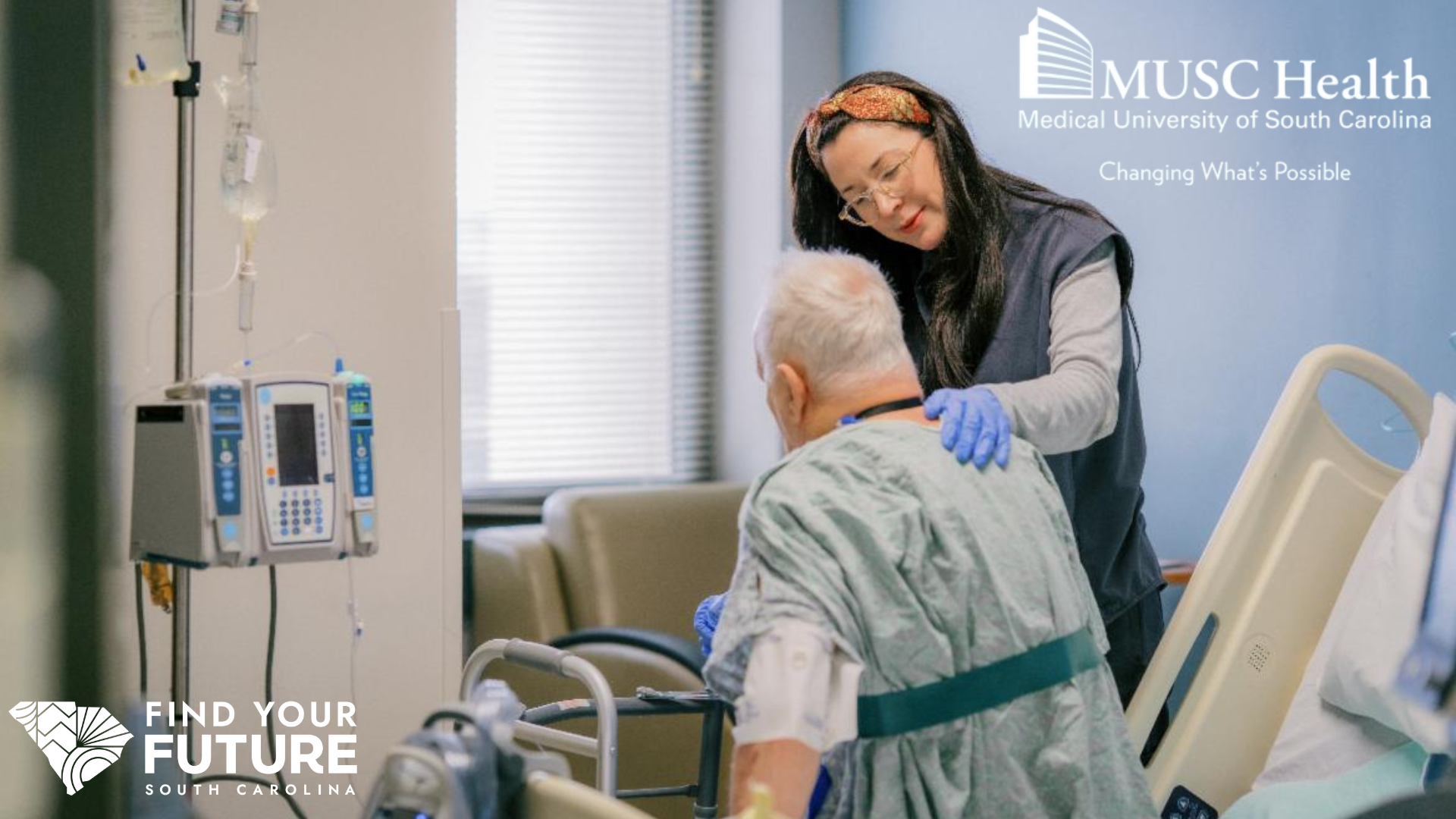
In our Catawba, Pee Dee, and Midlands regions, our Patient Care Technician/Certified Nursing Assistant (CNA) Apprenticeship provides an earn-while-you-learn pathway for individuals without prior certification. Participants receive classroom instruction, hands-on clinical training and capstone experience while preparing for an opportunity to transition into employment. We are also expanding internships, job shadowing, career exploration, and clinical education partnerships so students experience healthcare careers firsthand before committing to a career path. The value of these programs extends far beyond filling today’s vacancies. A CNA can become a nurse. A high school intern can discover a career in respiratory therapy. A student completing a clinical rotation at an MUSC hospital can decide to build a career, and a life, here in South Carolina.
Workforce development is not one program. It is a pipeline. Building it also requires changing the way we talk about career preparation. A four-year degree remains an excellent path, but it is not the only route to economic mobility. South Carolina’s workforce data shows significant need in occupations accessible through technical education, associate degrees, apprenticeships, and industry-recognized credentials. Instead of asking students simply, “Are you going to college?” we should be asking, “What career interests you, and what training will help you get there?” For one student, that pathway may be medical school. For another, nursing school. For someone else, an apprenticeship or technical credential that allows them to earn an income immediately and build long-term careers. South Carolina needs all of them.
Closing our workforce gap requires employers to actively develop talent rather than waiting for fully-trained applicants to arrive. Educators, employers, workforce partners, and community organizations must work together to invest in the local population.
At MUSC, developing the healthcare workforce is inseparable from our responsibility to the communities we serve. When we help someone enter a healthcare career, we do more than fill a vacancy. We create an opportunity for economic mobility and help ensure all South Carolinians have access to healthcare professionals.
During Workforce Development Month, every employer should ask ourselves: What are we doing today to prepare our workforce of the future? We need to open our doors earlier, strengthen partnerships and create pathways that turn first jobs into careers. South Carolina does not lack talent: our responsibility is to ensure that talent has a pathway to opportunity.
To learn more, please visit MUSC Health.