

South Carolina businesses are always looking for their next great employee, all while balancing limited time and resources. Engaging students early through work-based learning is one of the most effective ways to build a strong and reliable talent pipeline.
By collaborating to participate in work-based learning, industries, educators, and parents can:
- Upskill the future workforce
- Strengthen the local and regional workforce
- Increase brand visibility and community credibility
Together, industries, educators, and parents create intense, impactful, intentional work-based learning experiences that prepare students to enter the workforce confident, skilled, and career-ready.

What is Work-Based Learning?
Work-Based Learning (WBL) is an umbrella term for structured experiences that connect students with industries and provide intentional and real-world learning experiences.
Through WBL, students can:
- Explore careers and industries
- Gain hands-on experience
- Develop industry-related skills
- Build relations with employers in their community
Work-Based Learning creates a talent pipeline of a prepared, informed, and motivated future workforce.
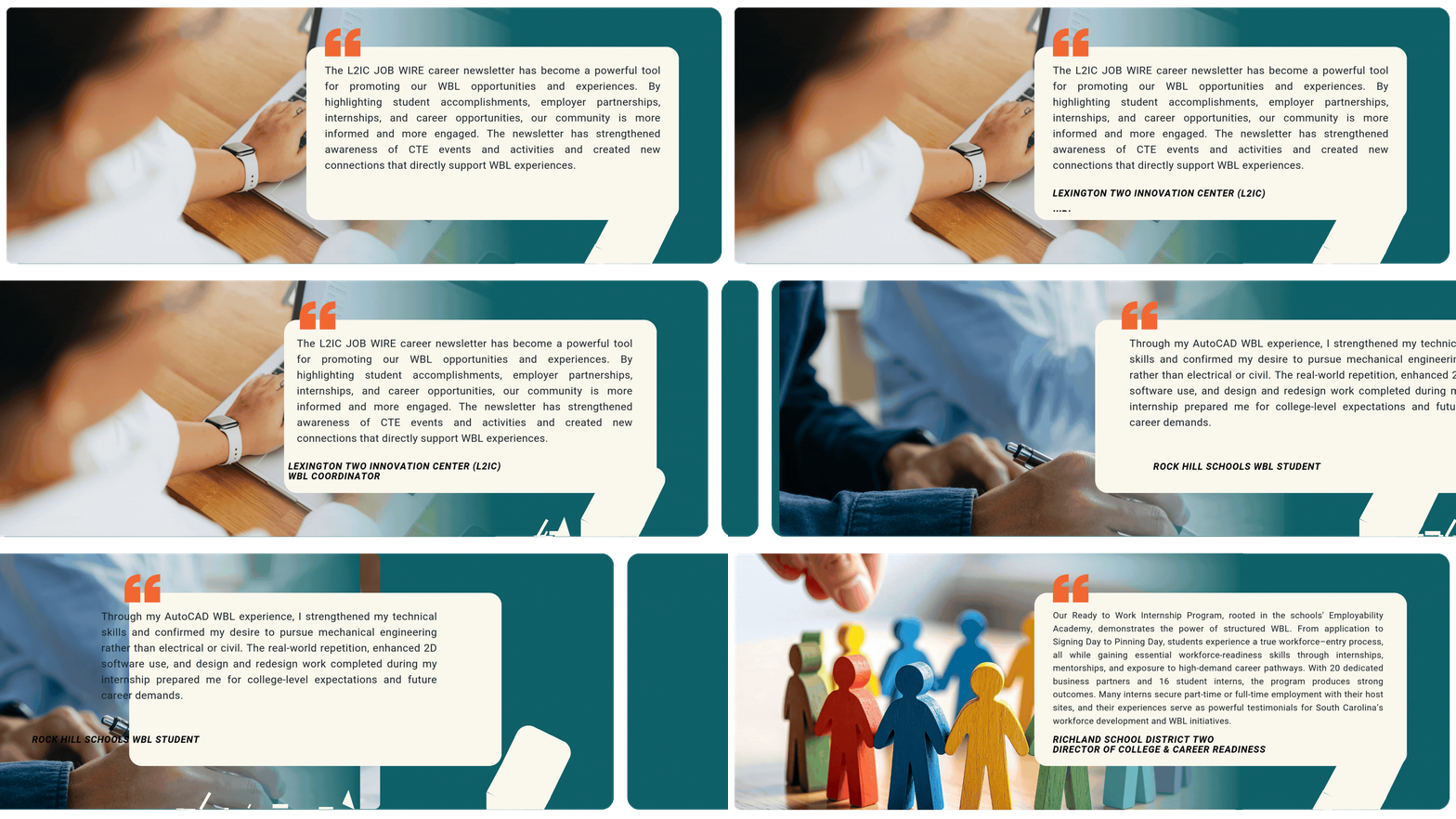
Work-Based Learning Testimonies
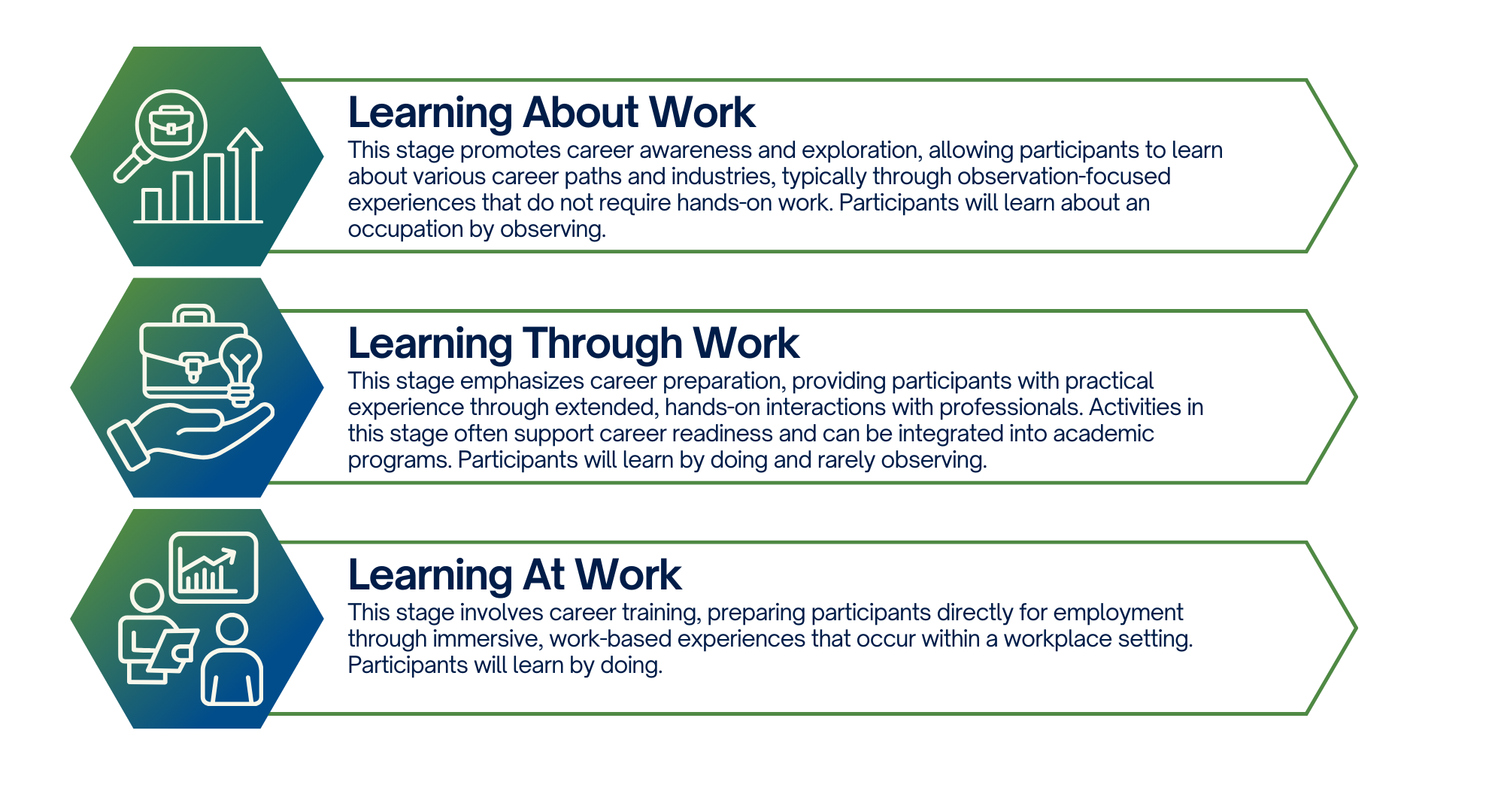
Three Stages of Work-Based Learning
Work-Based Learning progresses through three stages to help students move from career awareness to career readiness. At each stage, the engagement of industries, educators, and parents is valuable and necessary for achieving workforce success.
Industry Engagement Toolkit
This toolkit is designed to help industries, educators, and parents understand the importance of their collaboration and participation in shaping the workforce. Whether starting with small work-based learning experiences such as classroom visits or strengthening hands-on experience through internships and apprenticeships, the toolkit is designed to help industries and community partners better understand how they can play a meaningful role in exposing students to careers early and preparing the future workforce now.
This toolkit will:
- Outline how industries can be involved with educators and parents to elevate the future workforce
- Define Work-Based Learning and explain its benefits for industries, educators, parents, and students
- Support collaboration between industries and schools
Expand Work-Based Learning opportunities for students across South Carolina
*The Industry Engagement Toolkit was created by the Work-Based Learning Committee on behalf of the Coordinating Council for Workforce Development (CCWD) and the Office of Statewide Workforce Development (OSWD), a division of the SC Department of Employment and Workforce (SC DEW). Team members from the Work-Based Learning Committee provided extensive review and comment, and contributed content to all sections of the toolkit.
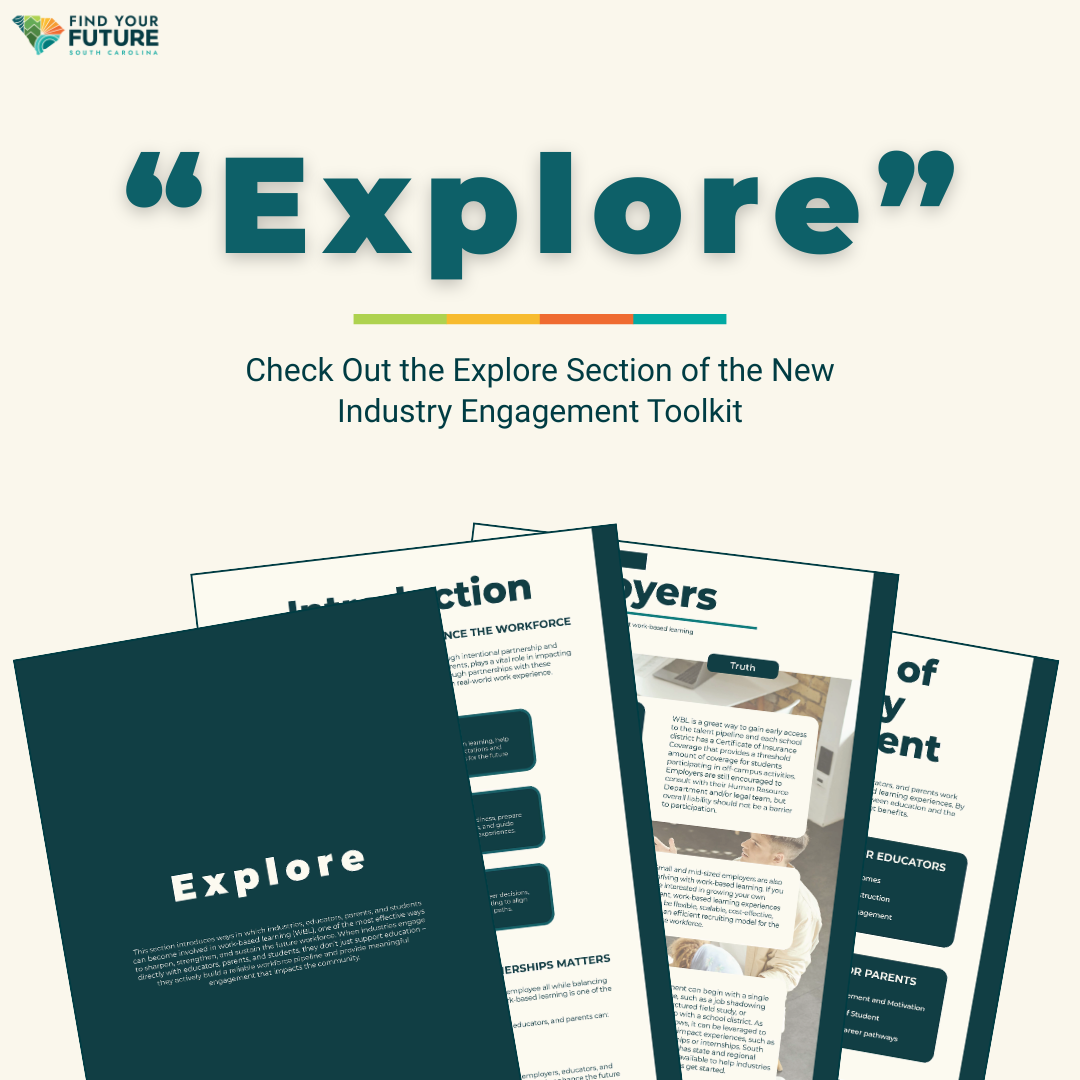
This section introduces methods for industries, educators, parents, and students to become involved in work-based learning (WBL), one of the most effective ways to sharpen, strengthen, and sustain the future workforce. When industries engage directly with educators, parents, and students, they don’t just support education – they actively build a reliable workforce pipeline and provide meaningful engagement that impacts the community.
Click here to review or download Section 1: Explore of the Industry Engagement Toolkit.
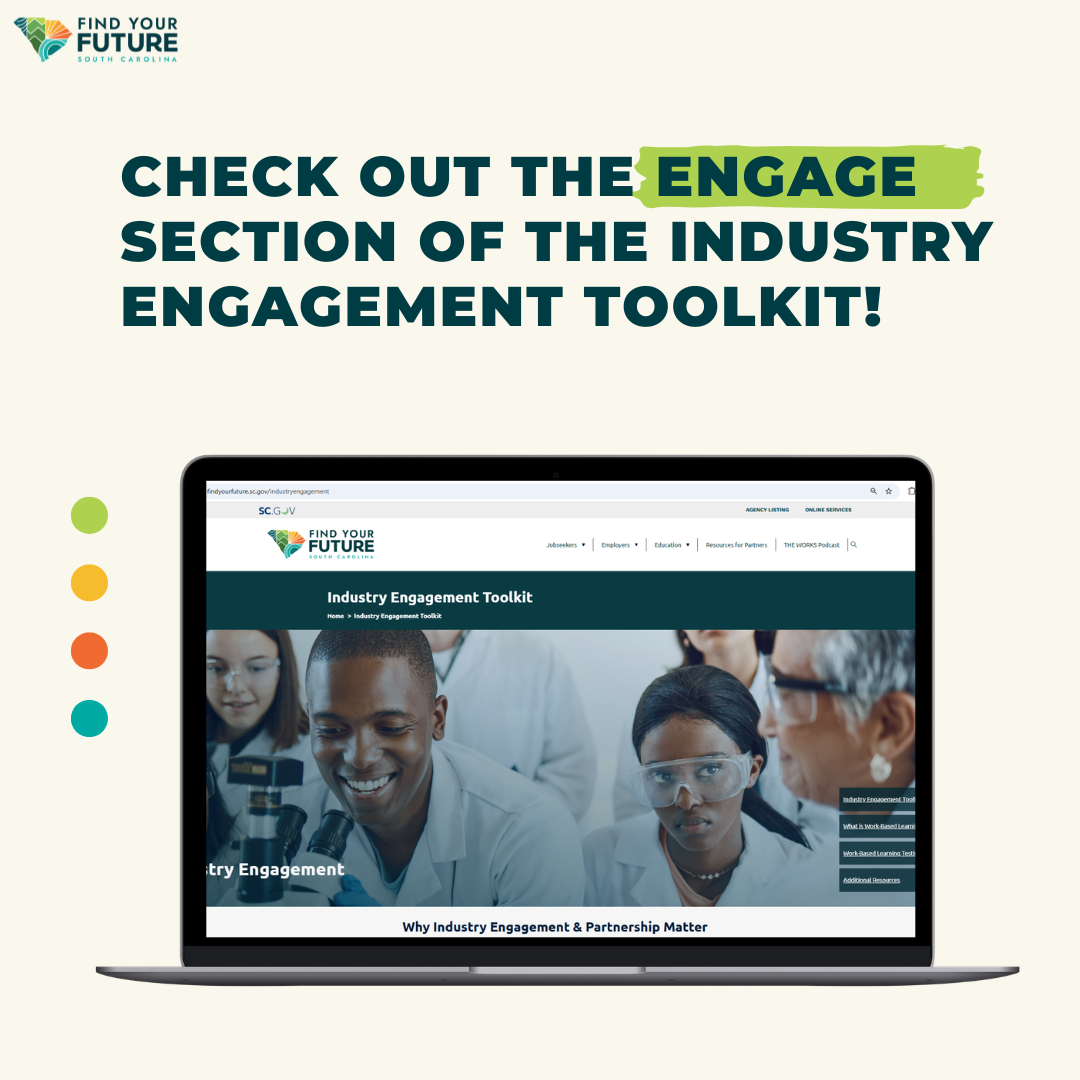 This section introduces conversation starters and methods industries, educators, parents, and students can use to work together to create work-based learning (WBL) opportunities. When industries connect with educators, parents, and students, they don’t just support work-based learning; they actively build meaningful relationships with the future workforce.
Click here to review or download Section 2: Engage of the Industry Engagement Toolkit.
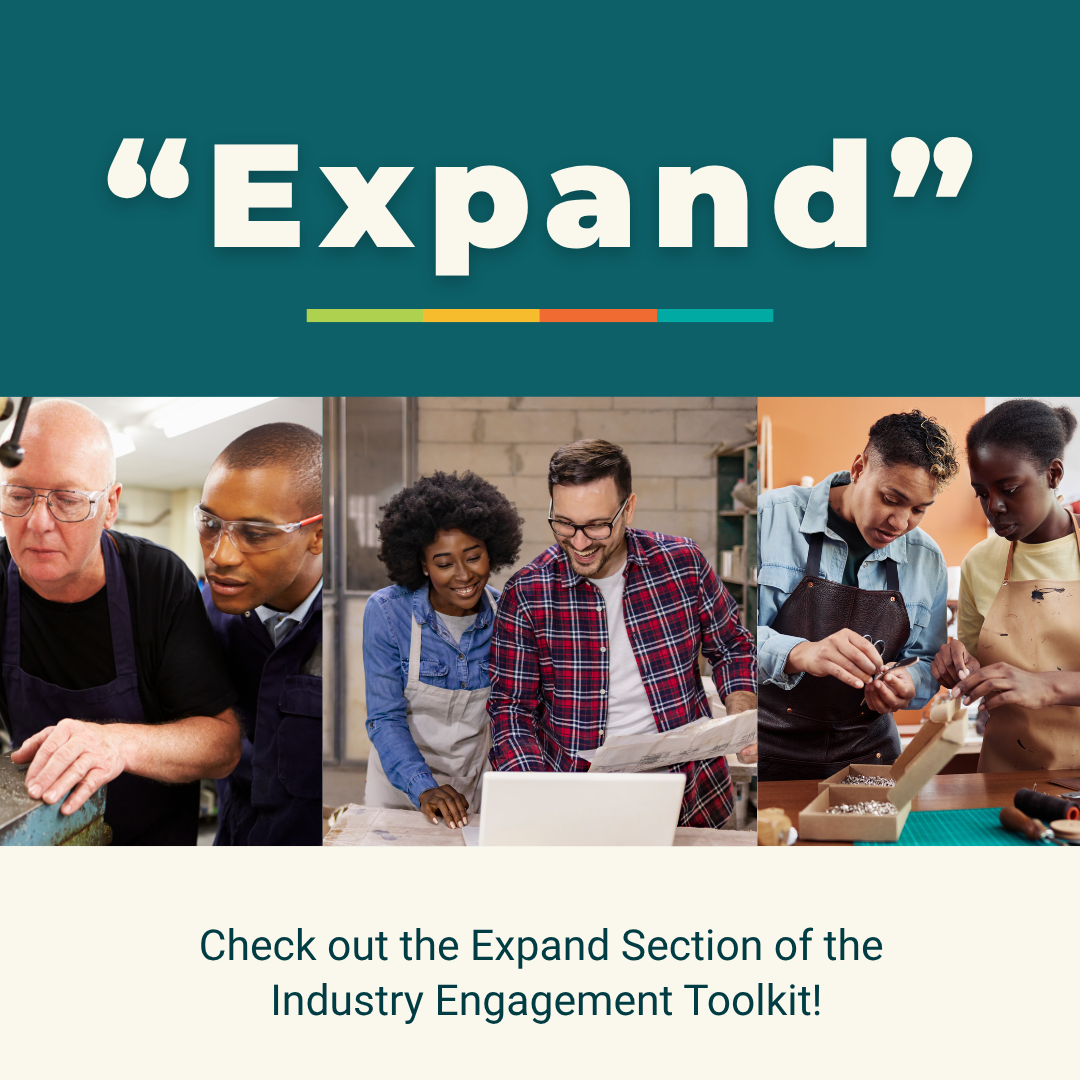 This section introduces resources for industries, educators, parents, and students to stay informed, stay engaged, and stay compliant while offering or supporting work-based learning opportunities. When industries are compliant and engage directly with educators and students, they actively prepare the workforce through hands-on learning and talent enhancement opportunities.
Click here to review or download Section 3: Expand of the Industry Engagement Toolkit.